

What is the noise level of a PU foaming machine during operation?
Hey there! As a supplier of PU foaming machines, I often get asked about the noise level of these machines during operation. It's a valid concern, especially for those who are planning to use these machines in a production environment. In this blog, I'll share some insights on the noise level of PU foaming machines and what you can expect.
First off, let's understand what a PU foaming machine does. These machines are used to produce polyurethane foam, which is widely used in various industries such as furniture, automotive, and bedding. The process involves mixing different chemicals, which then react to form foam. This reaction generates heat and pressure, and the machine has to work to control these factors to produce high - quality foam.
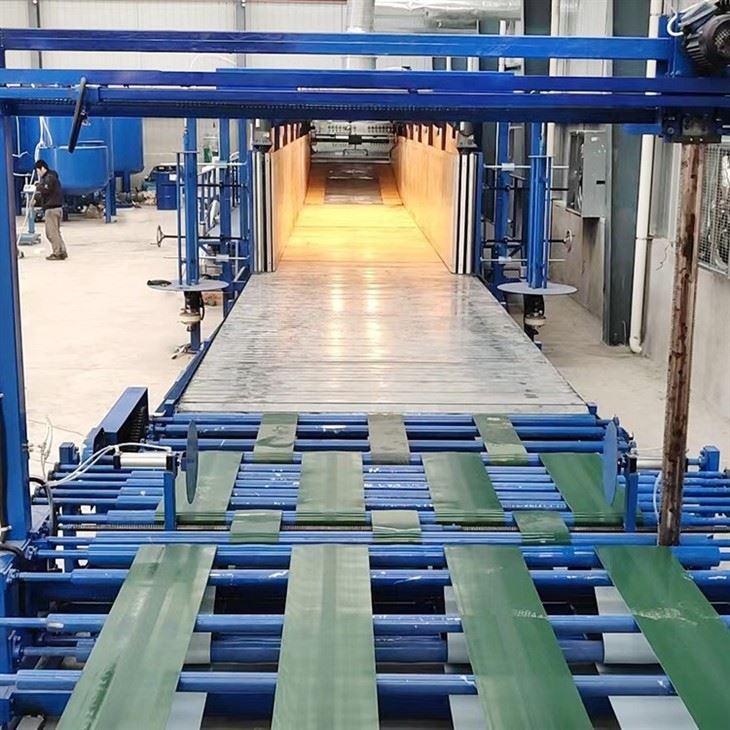
Now, when it comes to noise, the level can vary depending on several factors. One of the main factors is the type of PU foaming machine. There are different models available, each designed for specific applications. For example, a Continues Sponge Production Machine is used for continuously producing sponge - like foam. These machines usually have a set of pumps, motors, and mixing units. The pumps are responsible for moving the chemicals through the system, and the motors power these pumps. The operation of these pumps and motors can generate a significant amount of noise.
Typically, the noise level of a standard Continues Sponge Production Machine can range from 70 to 85 decibels (dB). To put this into perspective, normal conversation is around 60 dB, and a vacuum cleaner operates at about 70 - 80 dB. So, the noise from a Continues Sponge Production Machine is comparable to that of a vacuum cleaner, but it can be more continuous depending on the production schedule.
Another type of machine is the Mattress Making Machine Foam. This machine is specifically designed for making foam mattresses. It has more complex components compared to a simple sponge production machine. It often has larger mixing heads and more powerful motors to handle the larger volume of foam required for mattress production.
Due to these larger and more powerful components, the noise level of a Mattress Making Machine Foam can be a bit higher. It can range from 80 to 90 dB. At this level, it's important to take proper safety measures. Prolonged exposure to noise levels above 85 dB can cause hearing damage, so workers in a production environment using these machines should wear appropriate hearing protection.
The Foam Sheet Making Machine is yet another type of PU foaming machine. It's used to produce foam sheets of various thicknesses. The noise level of this machine also depends on its size and the power of its components. Smaller foam sheet making machines may have a noise level similar to the Continues Sponge Production Machine, around 70 - 85 dB. However, larger industrial - grade machines can reach up to 85 - 90 dB.
There are also some factors that can affect the noise level of a PU foaming machine other than its type. The age of the machine plays a role. An older machine may have worn - out components, such as bearings in the motors or pumps. These worn - out parts can cause more friction and vibration, which in turn increases the noise level. Regular maintenance can help keep the noise in check. By replacing worn - out parts and lubricating moving components, you can reduce the noise generated by the machine.
The installation environment also matters. If the machine is installed on an uneven surface, it can cause additional vibration and noise. A well - installed machine on a stable and level foundation will operate more quietly. Also, the presence of sound - absorbing materials in the production area can help reduce the overall noise. For example, using acoustic panels on the walls can absorb some of the sound waves and make the working environment more comfortable.
Now, you might be wondering if there are any ways to reduce the noise level of a PU foaming machine. Well, one option is to use noise - reducing enclosures. These enclosures are designed to surround the machine and block the sound waves from escaping. They can be made of materials like steel or aluminum with sound - absorbing insulation inside. By using a noise - reducing enclosure, you can typically reduce the noise level by 10 - 15 dB.
Another approach is to invest in more advanced and quieter models of PU foaming machines. Manufacturers are constantly working on improving the design of these machines to make them more energy - efficient and quieter. These new models often have better - engineered components that generate less noise during operation.
If you're in the market for a PU foaming machine, the noise level should definitely be one of the factors you consider. But don't let the noise scare you off. With the right safety measures and noise - reduction techniques, you can operate these machines in a relatively comfortable environment.
As a supplier, I understand that every customer has different needs. Whether you're looking for a machine for small - scale production or a large industrial facility, we have a wide range of options available. Our sales team is always ready to answer your questions and help you choose the right machine for your specific requirements.
If you're interested in purchasing a PU foaming machine or want to learn more about our products, feel free to reach out. We can provide you with detailed information about the noise levels of our machines, as well as other technical specifications. Make the right choice for your production needs and start producing high - quality polyurethane foam with our reliable machines.
References:
- General knowledge of industrial machinery noise levels
- Industry reports on PU foaming machine technology and operation