

What are the advantages of a semi - automatic sponge production line?
If you're running a sponge manufacturing operation, you've probably spent a lot of time weighing your options when it comes to production lines. I've been a sponge production line supplier for over a decade, and one question I get more than any other is: "Semi-automatic or fully automatic? Which one's actually worth the investment?" The truth is, semi-automatic lines get a bad rap sometimes-people assume they're outdated, but in reality, they strike a perfect middle ground that works for a ton of operations, from small businesses just scaling up to medium-sized factories looking to optimize without blowing their budget. Let's break down the real advantages of going semi-automatic, and why it might be the exact fit your business needs right now.
First off, let's talk about cost-because let's be honest, that's the biggest barrier for most manufacturers, especially when you're just starting to ramp up output. Fully automatic lines sound impressive, but they come with a huge price tag: not just for the machine itself, but for installation, training, and ongoing maintenance. Semi-automatic lines? They cost roughly 30-50% less than fully automated ones, depending on the setup. For small to medium sponge makers, that difference isn't just extra cash in the bank-it's the difference between being able to launch a new product line, hire a couple more skilled workers, or cover unexpected supply chain costs. I've seen so many new factory owners jump into fully automatic lines too fast, only to get stuck with a massive debt load when demand doesn't hit the projections they based their investment on. Semi-automatic lines let you scale gradually, too. If you start with a semi setup, once your demand grows, you can upgrade pieces of it over time instead of replacing the whole line. It's way more flexible for businesses that aren't ready to lock into a huge capital expense.
Next, there's the skill factor. Sponge production isn't a one-size-fits-all process-different sponge types (like rigid foam for mattresses, soft foam for cushions, or specialty foam for packaging) need tiny tweaks to mixing ratios, curing time, and cutting dimensions. Fully automatic lines are programmed for specific outputs, so if you need to switch between a soft and rigid foam run, you're stuck spending hours reprogramming or even swapping out parts, which leads to downtime. Semi-automatic lines, on the other hand, rely on your experienced operators to make those small adjustments quickly. That might sound like a downside at first, but your on-floor team has way more control over the final product quality. And honestly, training your team on a semi-automatic line is way simpler than training them on a fully automated system. You don't need a degree in automation to run it-most of my clients have their new operators up to speed in 1-2 weeks, not months. Plus, when operators are hands-on, they're more likely to catch small issues (like a off-balance mix or a curing delay) early, before they turn into big waste. I've had clients tell me their semi-automatic lines actually produce less spoiled foam than their old fully automated setups because their team can troubleshoot in real time.
Don't sleep on downtime, either. Every machine will break down eventually, but semi-automatic lines are way easier to repair. Most of the parts are standard, off-the-shelf components-you don't need to wait for a custom part to ship from the machine manufacturer, which means less time your production line is idle. Fully automatic lines often have proprietary parts, so a simple sensor issue can turn into a week-long wait for a replacement. I've had a client last year whose fully automatic continuous foam machine went down, and they were without production for 10 days while they waited for a part. That's a 10-day gap in orders, which adds up to lost revenue and unhappy customers. With a semi-automatic line, if a mixer or a cutting blade breaks, you can pop in a replacement same-day from any local industrial supply store. Lower downtime means more consistent output, which is huge for keeping clients on track with their own orders.
Another big one: versatility. If you're not making the exact same sponge 24/7, semi-automatic lines are way more adaptable. Let's say you get a last-minute order for a specialty foam-something with a different density or size than your standard product. With a semi-automatic line, your team can adjust the mixing pumps or cutting tables in minutes, no full reprogramming needed. If you're locked into a fully automatic line, you might have to turn down that order because switching products is too much hassle. I recently worked with a small sponge maker who had a big jump in demand for packaging foam-their semi-automatic line let them shift production from cushion foam to packaging foam in under an hour, so they didn't lose the contract. If they'd had a fully automatic setup, they would have had to delay the order and probably lost the client for good.
Wait, but I know some of you are thinking: "Semi-automatic is less efficient, right?" It's a common myth, but here's the thing-for many operations, semi-automatic lines are just as efficient, if not more, than fully automatic ones for smaller batch sizes. Fully automatic lines are designed for mass, continuous runs, but if you're doing a mix of small and medium batches, the downtime from switching between products eats into that efficiency. Semi-automatic lines don't have that same overhead, so your total output per week doesn't drop as much as you'd think. And when you do need continuous production, a lot of my clients pair their semi-automatic line with easy-to-integrate parts to keep it running smoothly. You can check out some of the setups we offer-like the Continues Sponge Production Machine that's built to pair with semi-automatic controls for consistent, long runs, or the Horizontal Automatic Continuous Foaming Machine that lets you adjust speed and output on the fly without full automation. We also have the Automatic Sponge Foam Machinery that works with semi setups to cut down on manual labor for repetitive tasks, so you get the best of both worlds: less manual work than a fully manual line, and more flexibility than a fully automatic one.
Labor is another angle that's often overlooked. A lot of people think semi-automatic lines mean more manual work, but that's not the case anymore. The best semi setups are designed to handle the heavy lifting-mixing the raw materials, transporting the foam through the curing process, and even basic cutting. Your team is there to oversee and make small adjustments, not haul 50-pound foam blocks or monitor mixing 24/7. That means you need fewer workers to run the line, and your existing workers are less likely to get burned out from repetitive, physical tasks. I've had clients switch from fully manual lines to semi-automatic and cut their labor costs by 20% while keeping output the same. It's a win-win: your team is happier (less strenuous work) and your bottom line is better.
Waste reduction is a huge plus too, and it's tied to that operator control I mentioned earlier. With a semi-automatic line, your team can fine-tune the foam mix right when it's being produced, so you don't end up with whole batches of off-spec foam that you have to throw away. Fully automatic lines run on pre-set parameters, so if there's a small mistake in the raw material (like a slight variation in the polyol ratio), the machine keeps running until an error flag pops up-and by then, you might have hundreds of pounds of spoiled foam. I did a demo last quarter for a client who was throwing away 15% of their foam with their old fully automatic line; after switching to a semi-automatic setup, their waste dropped to 5% because their team could catch those small mix issues early. That adds up to thousands of dollars saved every month, especially when foam raw materials are as expensive as they are right now.
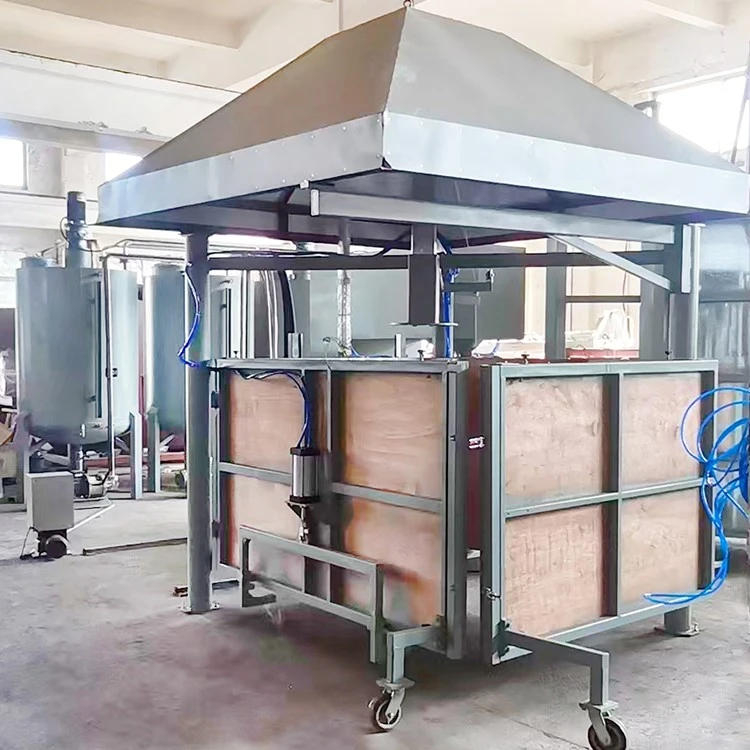
Let's also talk about space. A lot of small to medium factories don't have huge floor space to work with. Fully automatic lines are big-they need extra room for all the sensors, control panels, and safety barriers that come with automation. Semi-automatic lines are more compact, so you can fit them into your existing space without having to move your whole factory. That's a big deal for businesses that are operating out of a leased space and can't make major renovations. We've had clients who thought they had to upgrade their entire facility just to get a new production line, but with a semi-automatic setup, they were able to install it without any construction at all. If you're curious about how these lines fit, check out the Foam Sheet Making Machine we offer-its compact design pairs perfectly with semi-automatic controls for small to mid-sized spaces.
I know I mentioned scalability earlier, but it's worth circling back to because it's such a big advantage for growing businesses. When you start with a semi-automatic line, you're not locked into a certain production capacity. Once your demand hits a point where a fully automatic line makes sense, you can upgrade parts of your existing setup instead of replacing it. For example, you could add a more advanced mixing system or integrate a better cutting machine as you go, instead of dropping $50k+ on a whole new line right away. That gradual investment means you're only spending money when you actually need it, instead of putting your business at risk with a big upfront cost. We even have the Continues Continuous Foam Production Machine that's designed to work with semi-automatic controls, so when you're ready to upgrade, you can swap out modules without starting from scratch.
Now, I don't want to make it sound like semi-automatic lines are perfect for every business. If you're a large-scale manufacturer that's doing nothing but one type of sponge 24/7, fully automatic might be the way to go. But for most of the clients I work with-small to medium factories, custom foam makers, businesses that switch between different products-semi-automatic lines check all the boxes: lower upfront cost, easy training, less downtime, more versatility, lower waste, and the ability to scale as you grow. They're not the outdated middle ground people used to think they were; they're a smart, practical choice for the way most sponge manufacturing works today.

If you're tired of weighing the pros and cons, or you want to see what a semi-automatic line could do for your operation, I'm here to help. I've worked with hundreds of sponge manufacturers over the years, and I can walk you through what setup would fit your specific needs, no jargon, no pressure. Just reach out to me to talk through your production goals, budget, and any challenges you're facing with your current line. We can also show you more details on all the machines I mentioned earlier, so you can see exactly how they work for semi-automatic setups. Don't overcomplicate it-sometimes the middle ground is the best spot to grow your business.
Sales Department Contact
Tel / WhatsApp:
Ms. Sally: 008615160289964
Ms. Lily: 008615306060616
Ms. Sia: 008613599872295
Email: ptdmjx@ptdmjx.com
References:
- Industrial Foam Manufacturing Association. (2023). "Trends in Sponge Production Line Automation and Scalability." Retrieved from industry publication resources.
- Small Business Administration. (2022). "Capital Investment Strategies for Small Manufacturing Operations." Retrieved from SBA small business development resources.
- Global Sponge Market Report. (2024). "Demand and Production Efficiency for Flexible Foam Products." Retrieved from market research firm reports.
- Occupational Safety and Health Administration. (2023). "Ergonomics in Manufacturing: Semi-Automatic Line Benefits for Worker Safety." Retrieved from OSHA workplace safety resources.